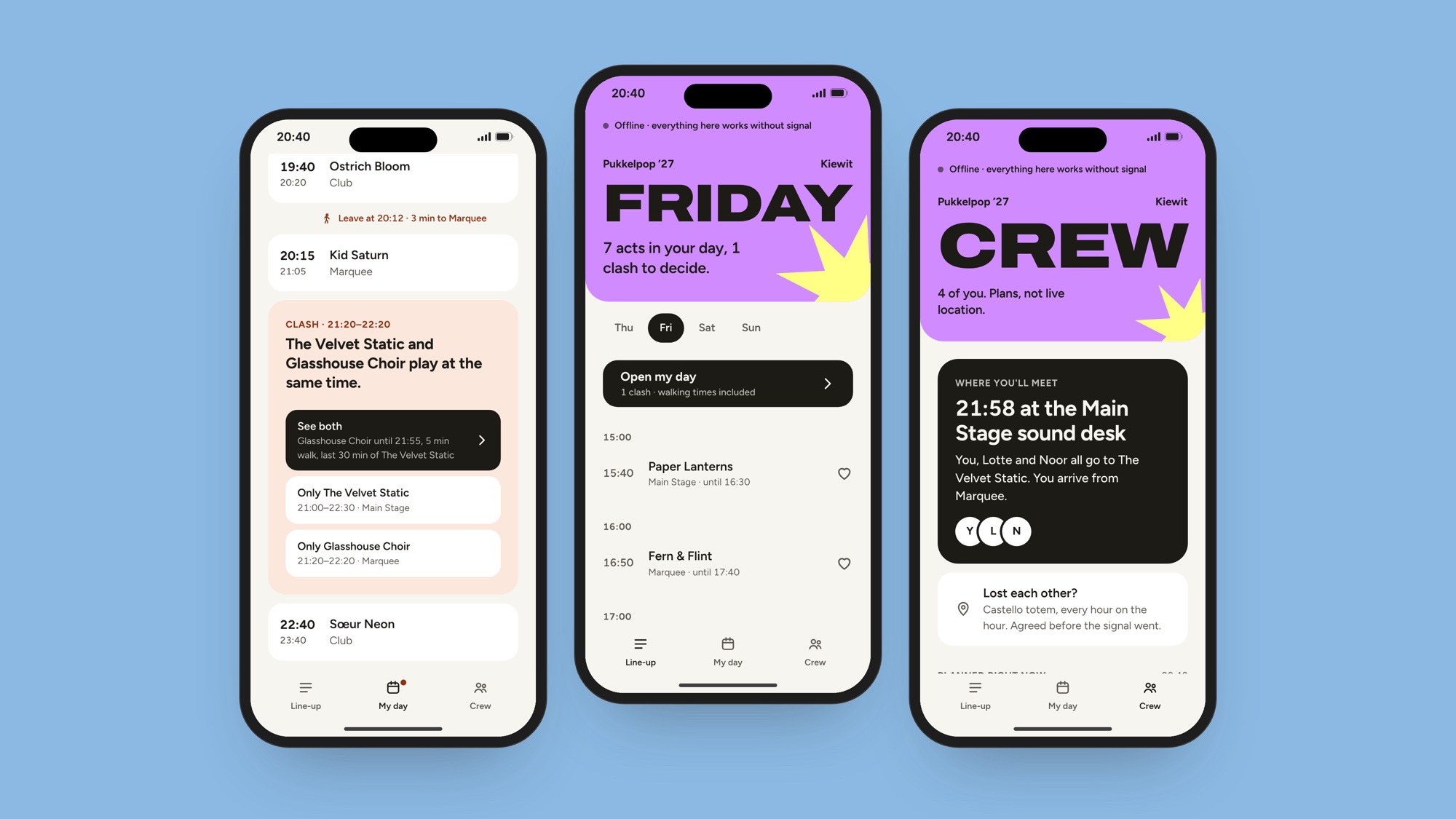
A concept for the Pukkelpop app built around the two things that go wrong at a festival: two acts you love at the same time, and losing your friends when the network gives out. Bold poster style on top, calm where you plan, and a new skin every edition on a core that stays the same.
プロジェクトの詳細は英語で掲載しています。
- 0screens that need signal
- 1decision per clash, with the answer suggested
- 7token values that change for a new edition
Challenge
The official Pukkelpop app has a personal timetable and an offline map, and few people use it: it has a handful of ratings in the app store. The real problems show up on the field. Two favourites play at the same time on stages a few minutes apart, and you only notice when you get there. With tens of thousands of phones in one field, the mobile network drops at the moments you need it, so "where are you?" doesn't get through. This is an unsolicited concept, not commissioned by or affiliated with Pukkelpop. The line-up on the screens is fictional.
Approach
Two problems, three screens. My day resolves clashes before you're on the field. Crew keeps a group together without live location. Line-up carries the brand. Everything else a festival app could do, from tickets to food, was left out on purpose. And one rule ran through all of it: if it needs signal, it doesn't work.
Decisions
Why it works the way it does
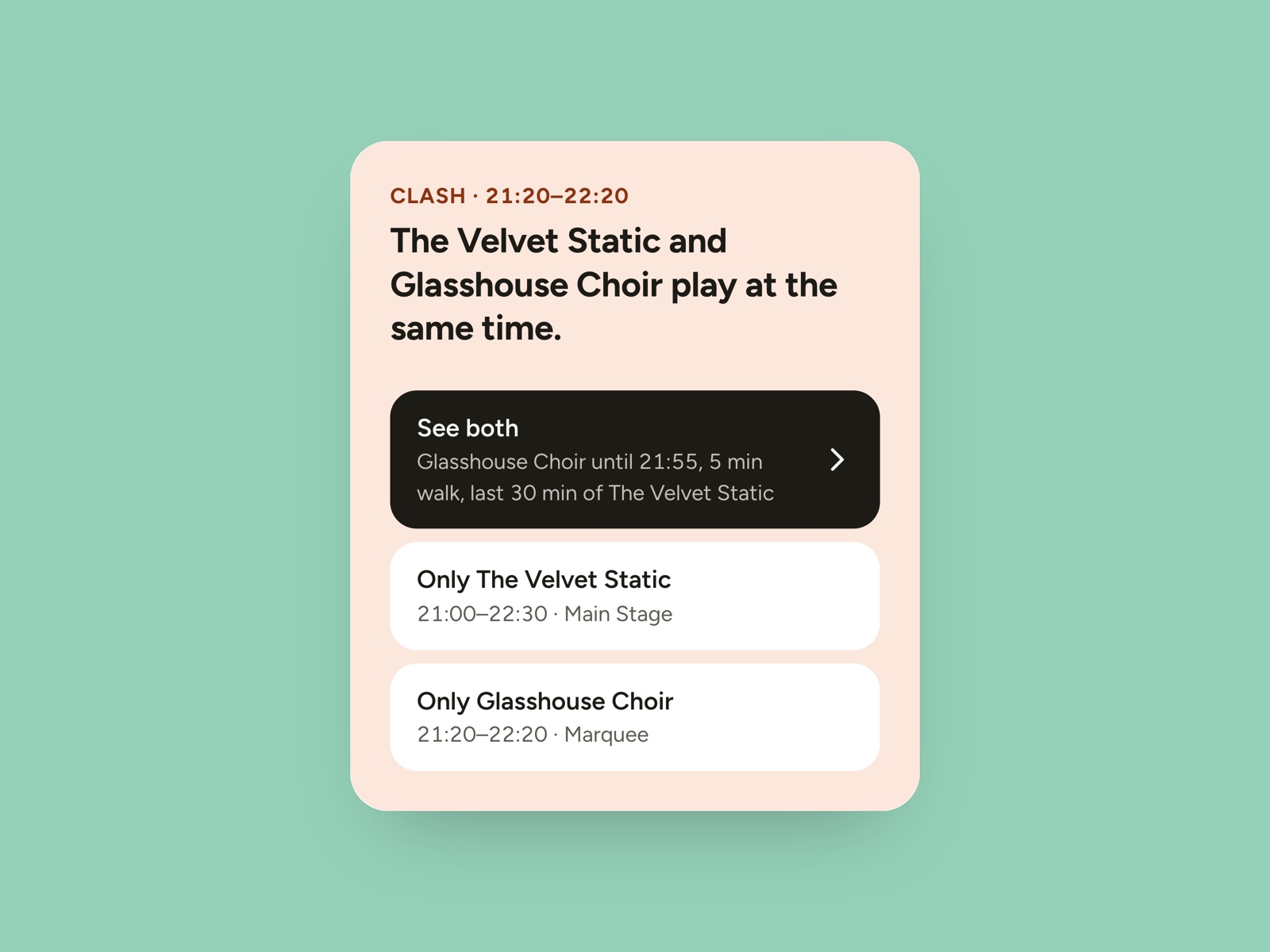
A clash comes with its answer
When two of your acts overlap, My day says so in one sentence and offers three answers. The suggested one is first and dark: see both. Watch the shorter set from the start, walk five minutes, and catch the last half hour of the headliner. The first version also drew the two sets as overlapping bars. Feedback said it was too much for one card, so the bars went and the sentence stayed.
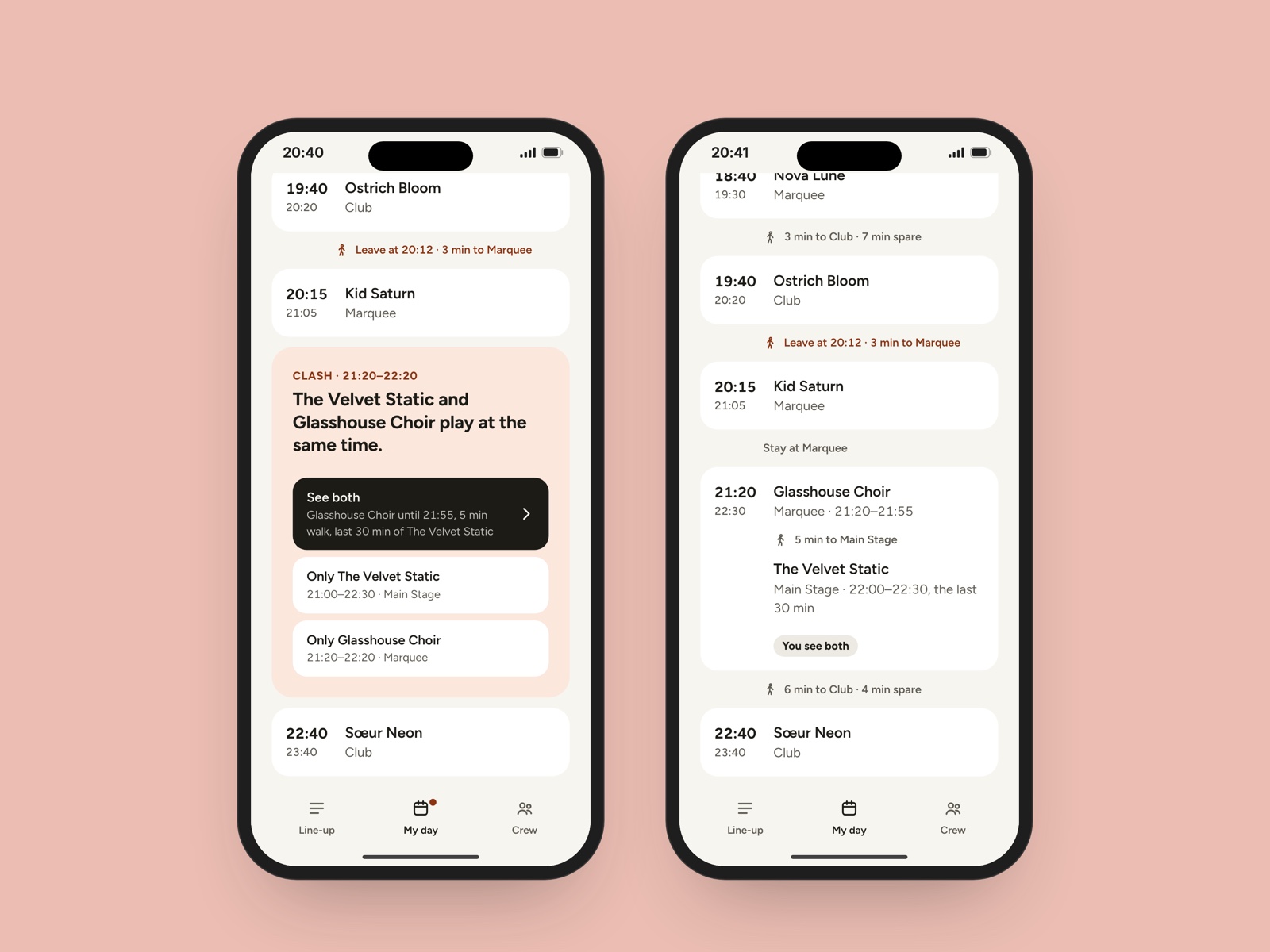
Small overlaps aren't clashes
Not every overlap needs a decision. Under ten minutes, the app adds a line instead: leave at 20:12, three minutes to the Marquee. Walking times between stages are measured once on the site map and shipped with the app, so the plan knows how far apart the stages are without a connection.
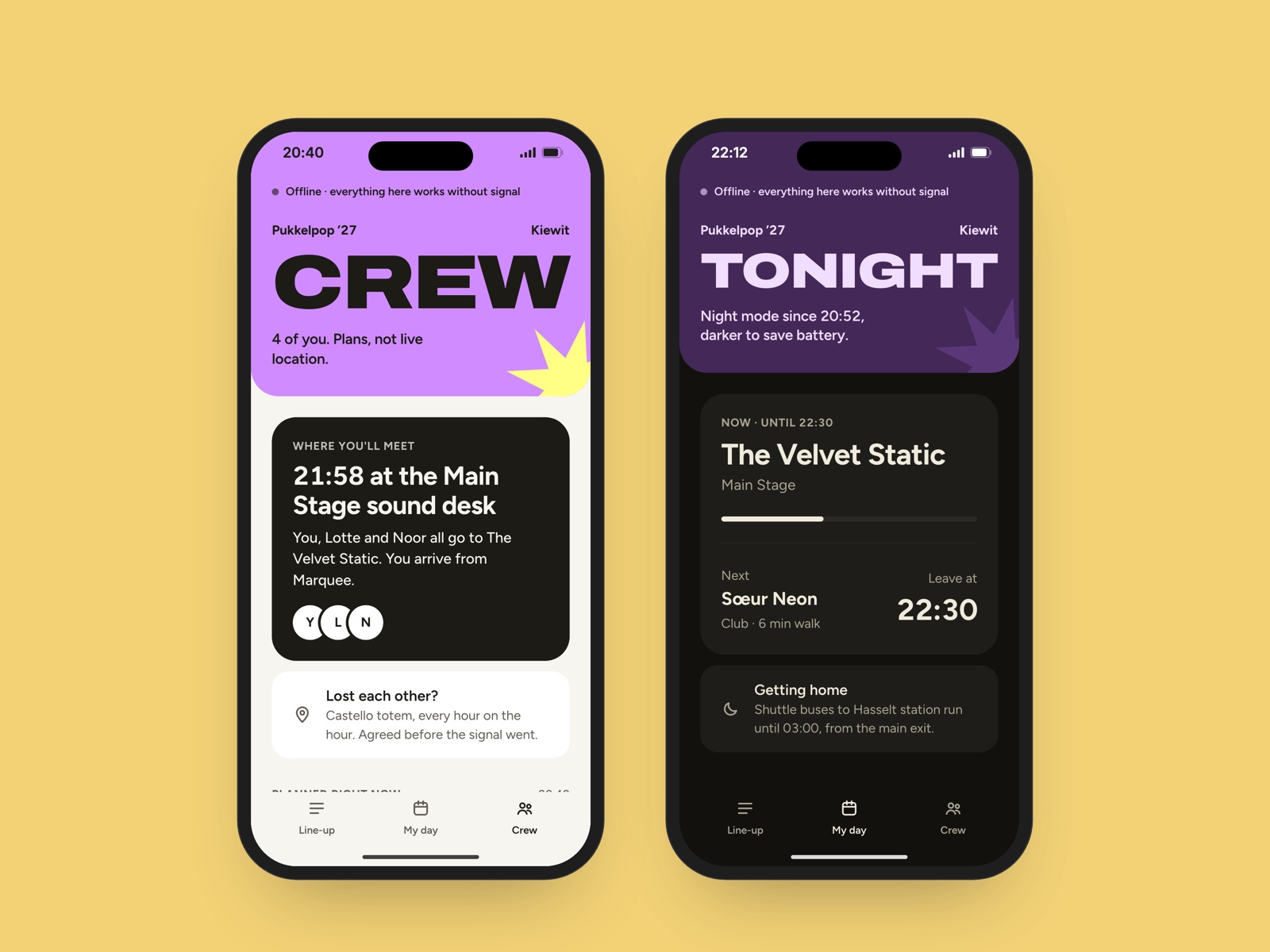
Plans, not live location
Live location fails exactly when the field is full. So Crew shares plans: you swap them by scanning each other's code, which works without signal. From those plans the app works out where you'll meet anyway, 21:58 at the sound desk, and keeps one fallback rule agreed in advance: lost each other, Castello totem, every hour on the hour. Anything about other people says planned, never live.
Night is a mode, not a theme
After sunset the screen becomes a now card: what's playing, how far into the set you are, and when to leave for the next one. Night is re-stepped rather than inverted. Warm off-white text, no pure white, filled blocks in a dimmed poster colour, so a phone doesn't light up a crowd and the battery lasts until the last shuttle.
System
One core, a new skin every year
Festivals rebrand every edition, and apps usually get rebuilt to match. Here the edition is a layer of seven tokens: poster colour, poster ink, the yearly mark, an accent and a display face with its width and tracking. The type scale, spacing, components and behaviour never change, so what people learned last summer still works this summer. The PKP27 violet is one step lighter than the one on the website, so the ink on it reaches 7:1.
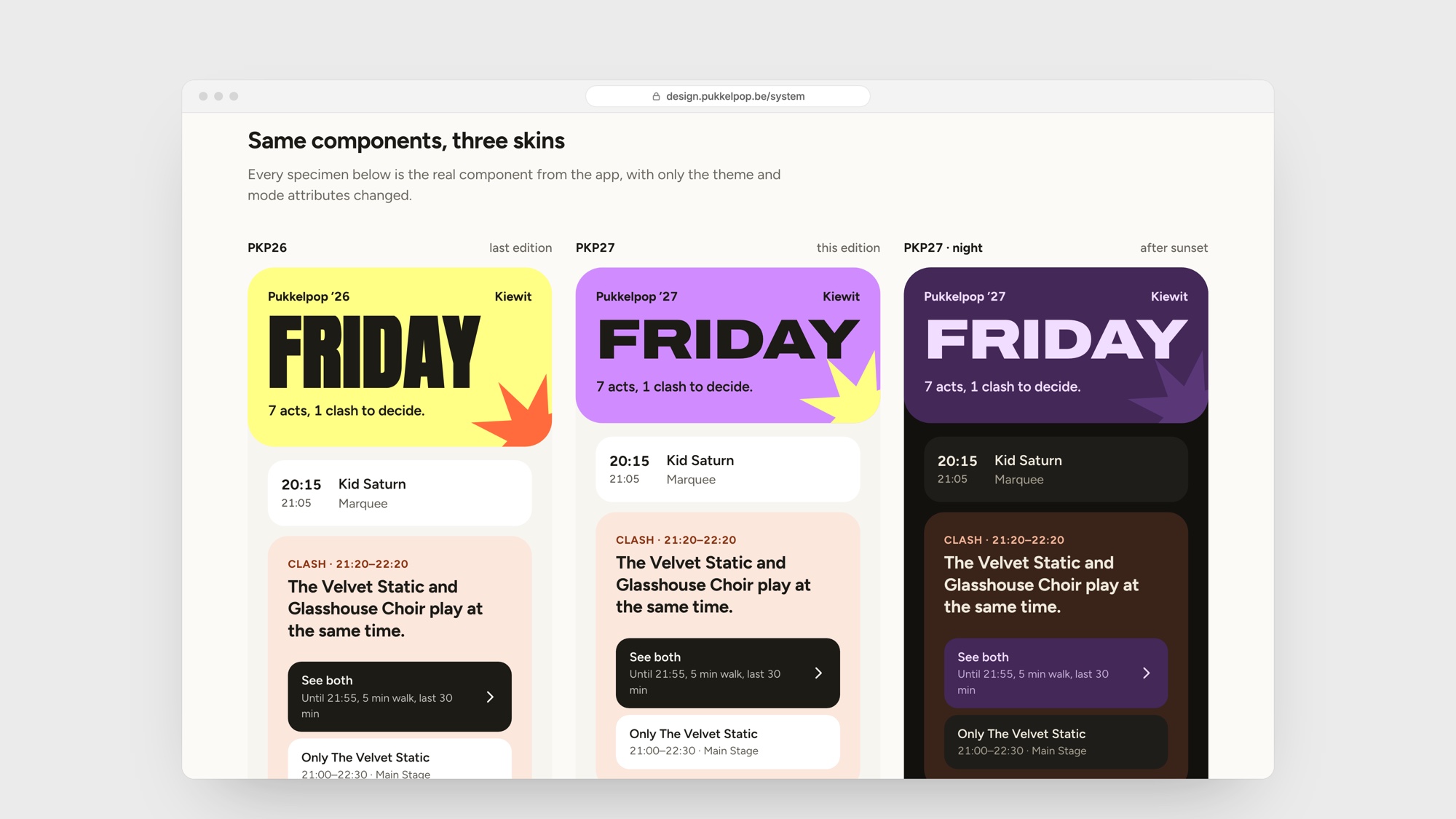
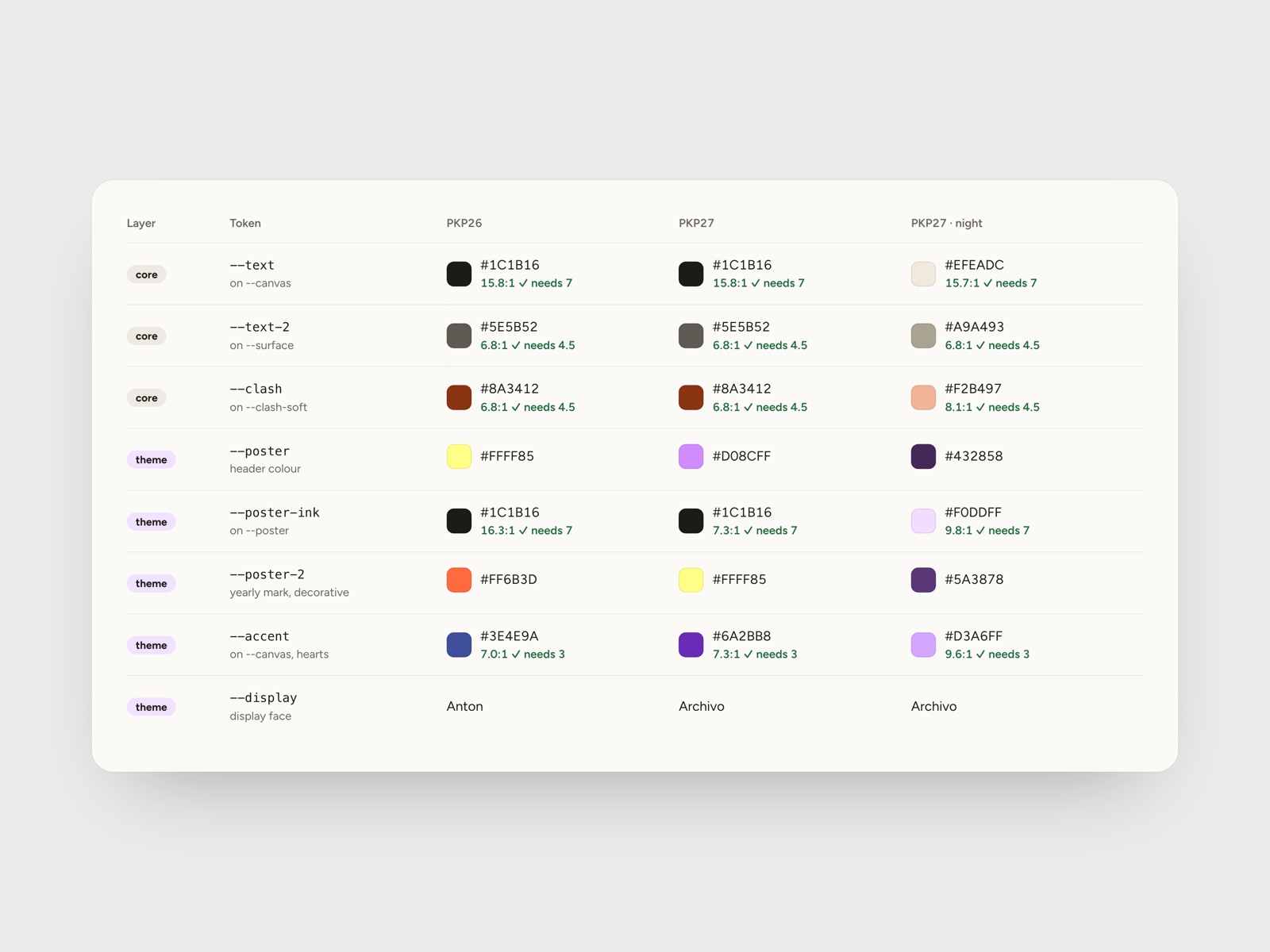
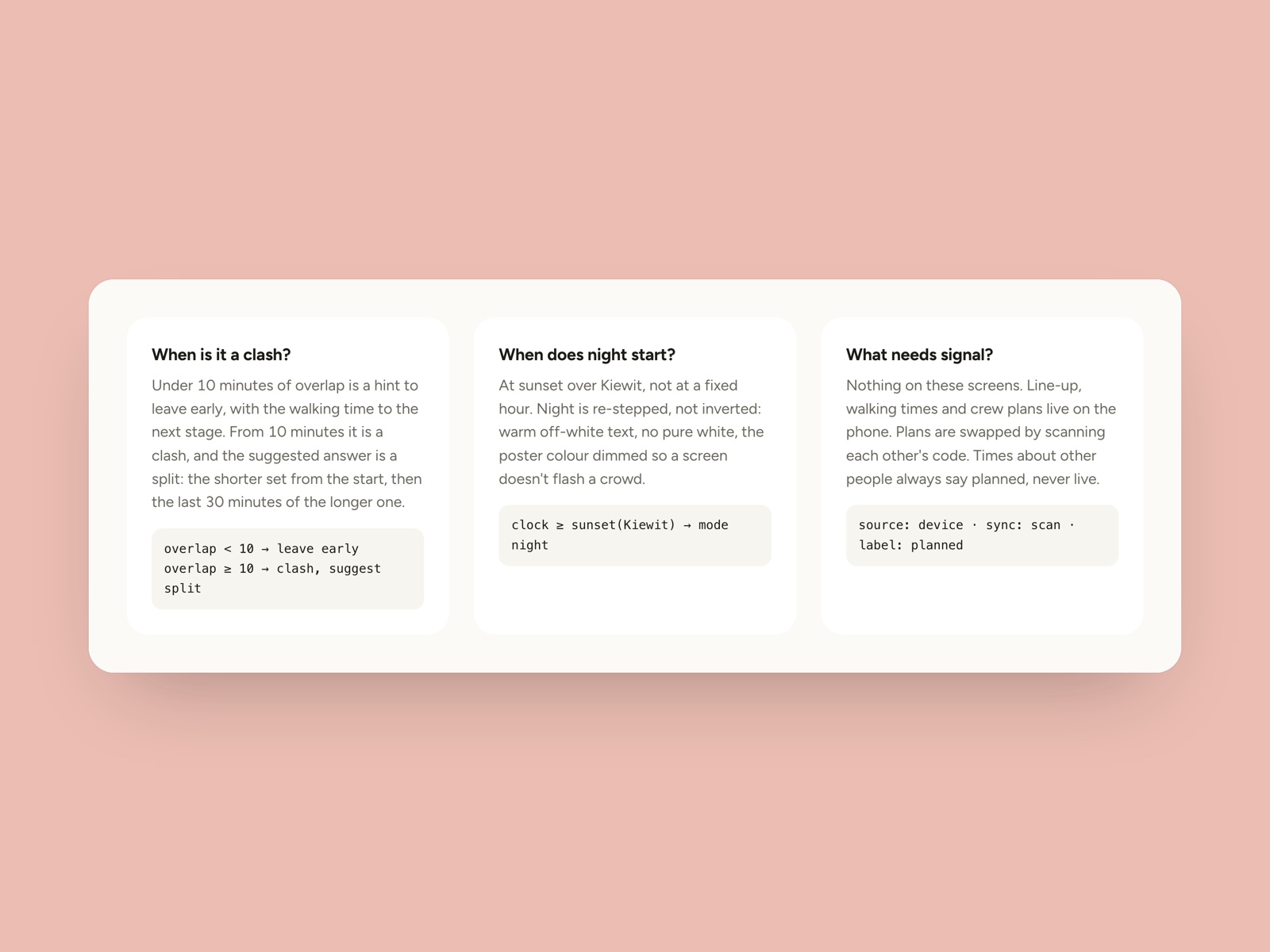
Left, the token table, with contrast measured live on the page for every skin. Right, the behaviour written down as rules, so the clash threshold, the start of night and the offline promise hold for every edition.
What I would test next
Do people take the split?
Show festival-goers their own clashes and see whether See both feels like a good deal or like missing the headliner.
Does scanning plans happen?
A pilot with a few groups at a smaller festival, counting how often crews actually swap plans before they split up.
Is night mode readable on the field?
Check the dark tokens outdoors at night, at low brightness, with people who have been standing for eight hours.
Result
An app that does two things well: it settles clashes before you're on the field, and it keeps a crew together when the network gives out. The poster is loud and changes every year. The planning underneath stays calm and stays the same.